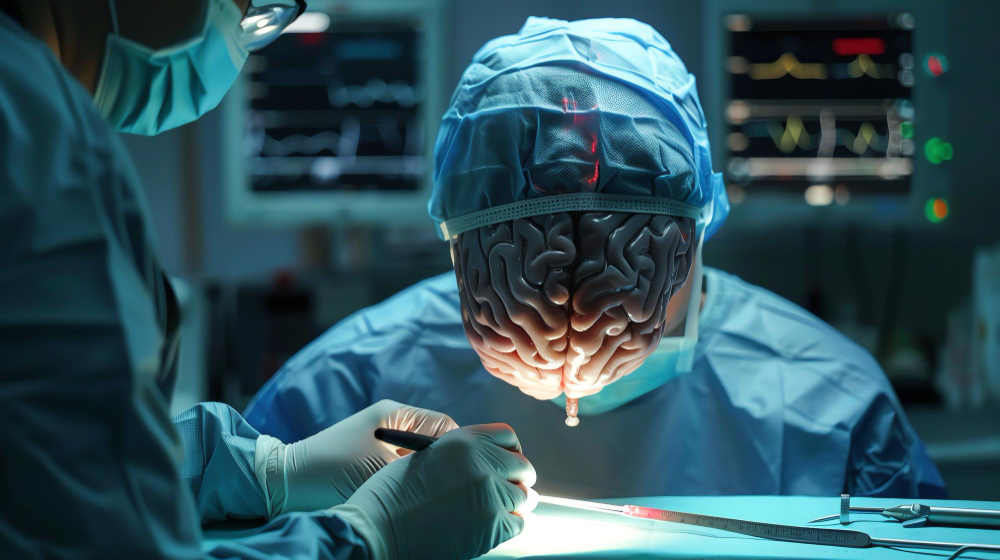
Endoscopic & Minimally Invasive Neurosurgery
For patients requiring less invasive options, we offer advanced endoscopic brain surgery, microscopic discectomy, keyhole craniotomy, UBE, and minimally invasive spine procedures. Using recent endoscopic technology, high-definition scopes, and computer navigation performed in our hospital, these procedures involve smaller incisions with precise surgical accuracy. This approach significantly reduces surgical trauma, hospital stay, and recovery time. Minimally invasive neurosurgery is effective for tumors, cysts, hydrocephalus, pituitary disorders, and various spinal conditions, ensuring safer, quicker, and less painful treatment without compromising surgical outcomes.
Frequently Asked Question's
1. What is minimally invasive neurosurgery?
Minimally invasive neurosurgery uses specialised instruments, small surgical openings, and technologies such as endoscopes or surgical navigation to reach and treat certain brain or spine conditions while limiting disruption to surrounding tissues.
2. What conditions can be treated with minimally invasive neurosurgery?
Depending on the patient's condition, minimally invasive techniques may be used for certain brain tumors, cysts, hydrocephalus, pituitary disorders, slipped or herniated discs, and other spinal conditions. The appropriate technique depends on the location and nature of the problem.
3. What is endoscopic brain surgery?
Endoscopic brain surgery uses a small camera-equipped instrument to help the neurosurgeon access and treat selected conditions through a less invasive surgical approach. Whether this technique is appropriate depends on factors such as the condition, its location, and the patient's overall health.
4. What is UBE spine surgery?
UBE, or Unilateral Biportal Endoscopy, is a minimally invasive spine technique that uses two small access points to allow the surgeon to visualise and operate around the affected spinal structures. It may be considered for selected spinal conditions after specialist evaluation. NIVIK lists UBE among its minimally invasive spine procedures.
5. Does minimally invasive neurosurgery mean a faster recovery?
Recovery depends on the condition, procedure, and individual patient. Minimally invasive approaches may involve smaller incisions and less tissue disruption, which can contribute to reduced hospital stay and recovery time in appropriately selected cases.