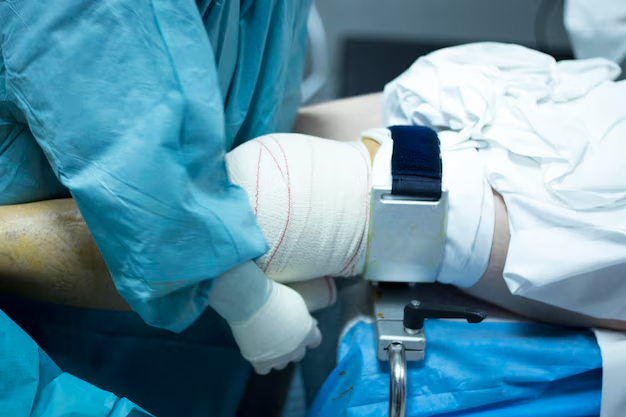
Fracture & Trauma Care
Our orthopedic team provides 24/7 trauma services, managing simple fractures to complex polytrauma cases. Using modern fixation devices and minimally invasive techniques, we ensure fast recovery and early mobilization. Emergency surgical care and continuous monitoring maximize patient safety and outcomes.
Frequently Asked Question's About Fracture & Trauma Care
1. How can I tell if an injury may have caused a fracture?
Severe pain, swelling, bruising, tenderness, difficulty moving the injured area, or an unusual change in the shape of a limb can occur with a fracture. An X-ray or other imaging test may be needed to confirm the injury.
2. What should I do immediately after a suspected fracture?
Keep the injured area as still as possible and avoid putting unnecessary pressure or weight on it. Seek prompt medical attention, particularly if there is severe pain, visible deformity, heavy bleeding, or an open wound.
3. How are fractures diagnosed and treated?
A doctor will assess the injury and may use X-rays or other imaging to understand the location and severity of the fracture. Treatment can involve immobilization, supportive care, or surgery depending on the type of fracture and how the bone is affected.
4. How long does it take for a broken bone to heal?
Healing time varies depending on the bone involved, the type of fracture, the patient's age and overall health, and whether complications are present. Some fractures heal within several weeks, while more complex injuries may require considerably longer.
5. Is rehabilitation needed after fracture treatment?
Rehabilitation can be important after a fracture, especially when the injury or treatment has affected strength, flexibility, or movement. Physiotherapy may help restore mobility and function as the bone heals and the doctor allows activity to increase. NIVIK provides orthopedic and post-injury rehabilitation support.