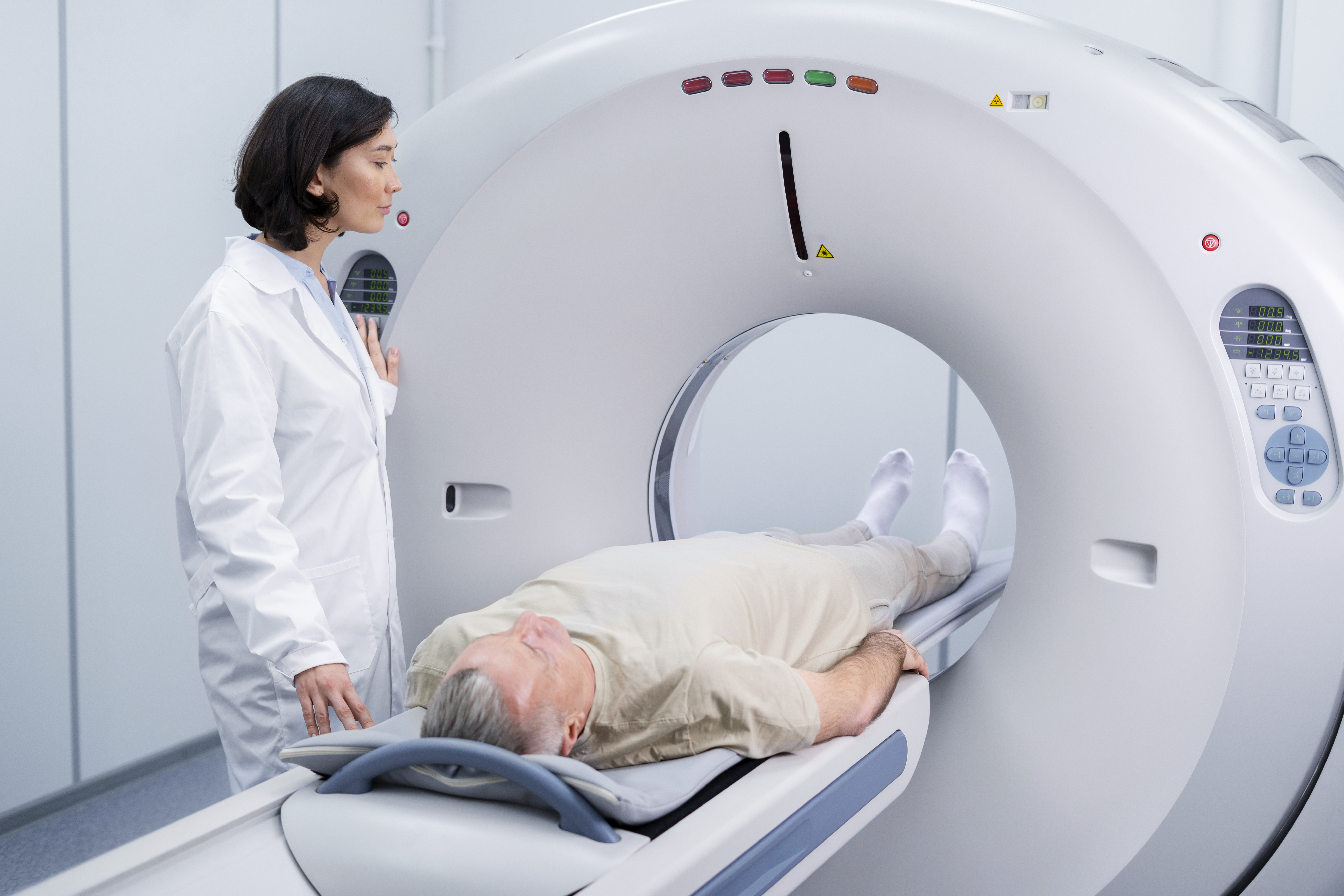
Computed Tomography
This imaging technique provides clear, high-quality 3D images that allow doctors to see deep inside the body. It is especially helpful in trauma cases, detecting cancers, and evaluating problems related to internal organs, helping doctors make accurate diagnoses and treatment decisions.
Frequently Asked Question's About CT Scan
1. What is a CT scan and why is it recommended?
A CT scan is an imaging test that creates detailed cross-sectional pictures of structures inside the body. Doctors may recommend it to examine organs, bones, blood vessels, soft tissues, injuries, infections, tumors, or other conditions that need a closer look.
2. What conditions can a CT scan help detect?
CT imaging can help doctors evaluate a wide range of conditions, including internal injuries, infections, tumors, abdominal problems, lung conditions, bone injuries, and abnormalities involving blood vessels. The area scanned depends on the symptoms and the reason for the examination.
3. Do all CT scans require contrast dye?
No. Some CT examinations are performed without contrast, while others may use a contrast material to make particular organs, tissues, or blood vessels easier to see. The need for contrast depends on the type of scan and what the doctor is investigating.
4. How should I prepare for a CT scan?
Preparation depends on the type of CT examination. You may be asked to avoid food or drinks for a few hours, particularly when contrast is planned. It is also important to inform the medical team about allergies, medications, medical conditions, and any possibility of pregnancy before the scan.
5. How long does a CT scan take and is it painful?
A CT scan is generally quick and painless. You will usually lie on a table that moves through the scanner while images are taken. The exact duration depends on the body part being examined and whether additional imaging or contrast is required.