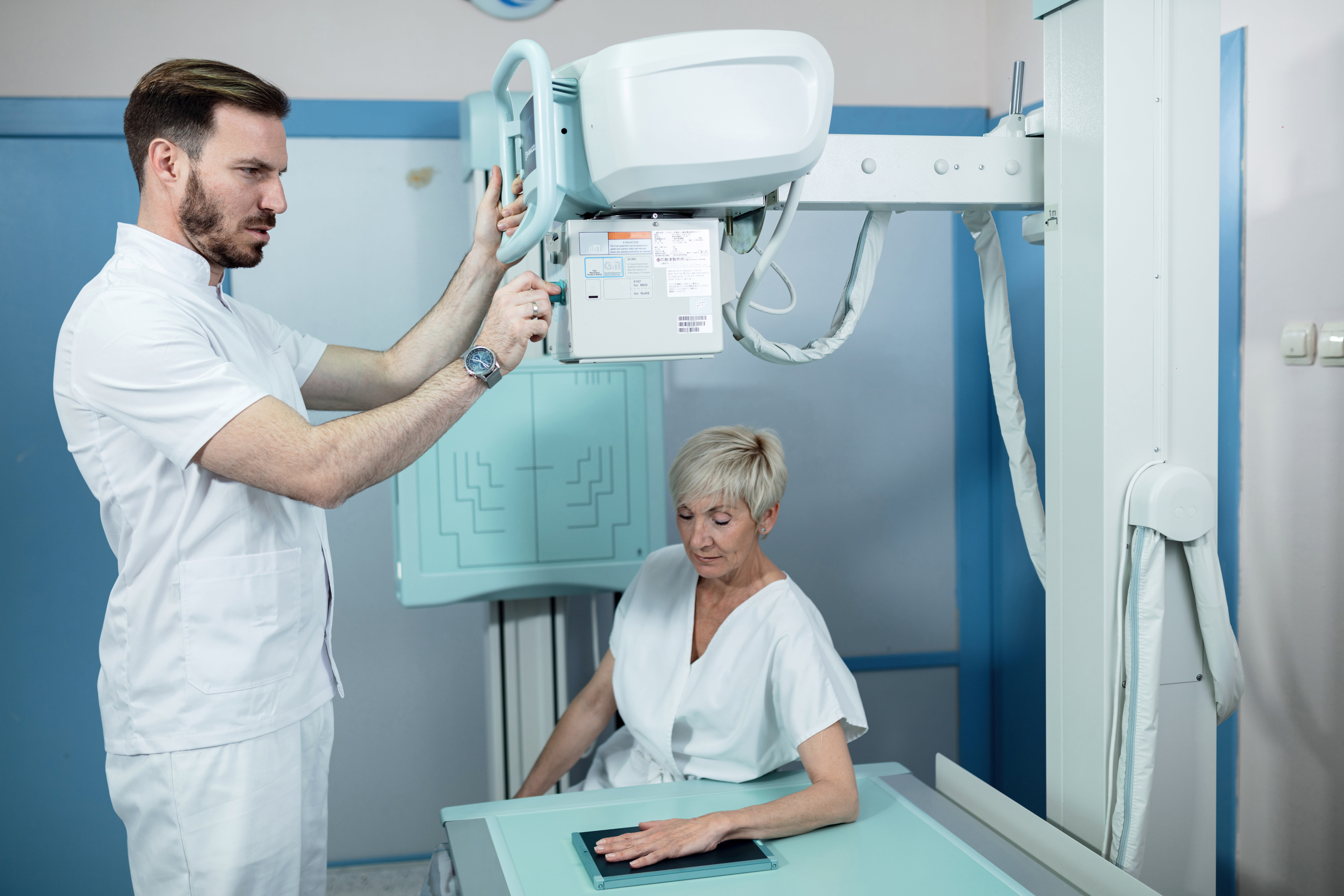
Radiographs
This type of X-ray is used to examine the abdomen, chest, and bones to help detect injuries, infections, fractures, lung conditions, or other abnormalities. It provides quick and clear images that assist doctors in diagnosing problems and planning the right treatment.
Frequently Asked Question's About Radiographs
When does a doctor recommend an X-ray?
An X-ray may be recommended when a doctor needs to examine bones, the chest, or other internal structures. It can help investigate injuries, suspected fractures, chest conditions, and other medical concerns.
What can a chest X-ray show?
A chest X-ray can help doctors examine the lungs, heart, and surrounding structures. It may assist in identifying certain infections, lung abnormalities, fluid buildup, or other changes that require further evaluation.
Can X-rays detect a fracture immediately after an injury?
An X-ray can often identify a broken or displaced bone, making it an important investigation after many injuries. However, some injuries may require additional imaging if the X-ray does not provide enough information.
Do I need to remove jewellery before an X-ray?
You may be asked to remove jewellery, watches, belts, or other metal items near the area being examined. This helps prevent objects from interfering with the quality of the X-ray images.
How often can a person safely have an X-ray?
There is no single limit that applies to everyone. The need for an X-ray depends on the medical situation, and healthcare professionals recommend it when the expected diagnostic benefit justifies the radiation exposure. Tell the radiology team if you are pregnant or may be pregnant before the examination.