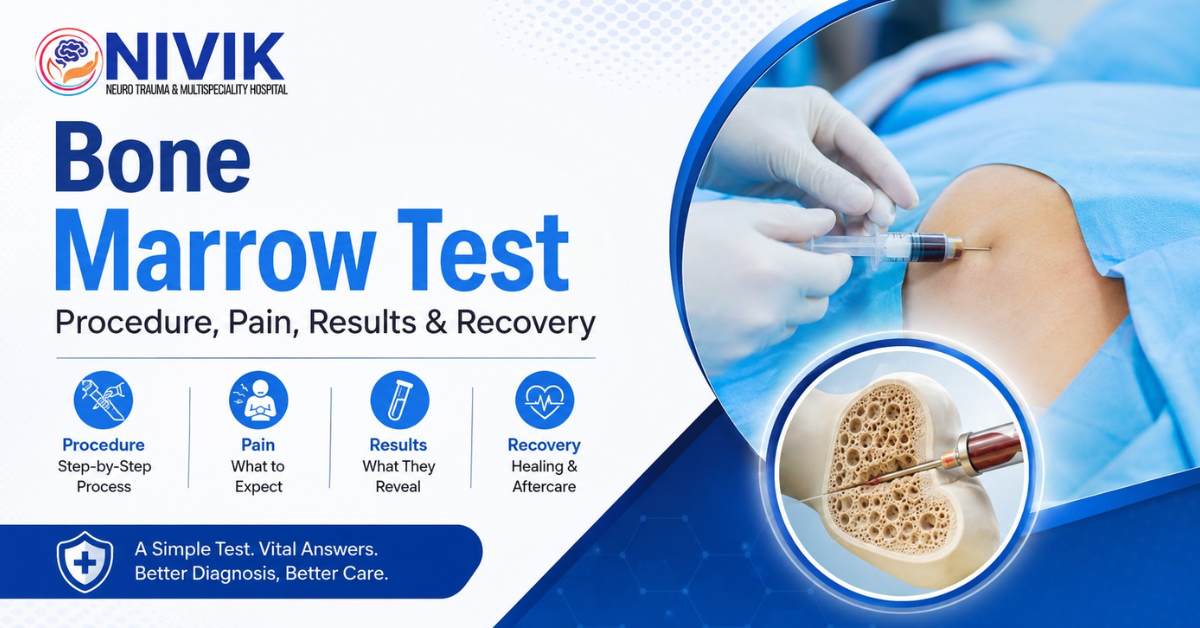
Bone Marrow Test: Procedure, Pain, Results & Recovery
Bone marrow tests are an important diagnostic process. It helps doctors to analyze the condition of bone marrow, the tissue that is present inside the bones responsible for producing blood cells. The doctor may advise the bone marrow test if the results of blood tests are abnormal that raise suspicions of any disease, infection, or cancer.
Bone marrow testing raises several questions in people’ minds particularly in terms of the procedure of the test, the kind of pain involved in the test, and the outcome. Knowing about the bone marrow test can be useful in such circumstances.
What Is a Bone Marrow Test?
Bone marrow testing helps in evaluating the bone marrow and its fluids. The test helps the doctor to understand how well is the bone marrow producing red blood cells, white blood cells, and platelets.
A bone marrow test generally consists of:
- Bone Marrow Aspiration: In which small amounts of liquid bone marrow are collected.
- Bone Marrow Biopsy: The procedure in which tiny pieces of solid tissue from bone marrow are removed.
- In many cases doctors do both procedures together to have a complete overview of the condition of the bone marrow.
When Is Bone Marrow Test Necessary?
Bone marrow tests are sometimes recommended by physicians in the following cases:
- A person has unexplained anemia
- A person has continuing fever of unknown origin
- There is an abnormality in white blood cell counts
- There are indications of leukemia
- There are signs of myeloma
- There are indications of some bone marrow diseases
- Iron levels must be tested, and it is essential to identify cases of excessive levels of iron and iron deficiency
- The efficacy of cancer treatment may need to be evaluated
A bone marrow test provides much-needed information that cannot be gathered through a normal test.
You can also read:- Food Rich in Vitamin B12: Benefits, Sources & Daily Intake
Bone Marrow Test Procedure: Step-by-Step
Many individuals ask themselves, "What is a bone marrow test?" The procedure itself takes roughly 20-30 minutes to perform and is classified as an outpatient procedure.
Pre-Test Preparation
Prior to performing the test, the doctor should:
- Go through the past medical history.
- Inquire about the medications that the patient is presently using, especially blood thinners.
- Determine whether or not the patient is allergic to specific medications or anesthetics.
- Explain the procedure to the patient and obtain their consent.
- There is no requirement of fasting unless specifically instructed by the doctor.
Bone Marrow Testing Procedure
The procedure is commonly done on the posterior iliac crest.
So, what happens during the procedure?
- The patient lies on his/her side/stomach.
- The area is disinfected.
- The local anesthetics are injected.
- The needle penetrates the bone.
- The first step is the extraction of the sample.
- The bandage is applied and the bleeding is stopped.
The procedure may appear overwhelming, but it will be performed accurately by a professional.
You can also read:- Chest Pain After Eating: Causes, Symptoms & Treatment
Is a Bone Marrow Test Painful?
Much of patient’s worry would stem from an anticipated pain associated with the bone marrow aspiration procedure. Luckily, local anesthesia can help ease the pain surrounding the skin. Yet, people could still face:
- The pressure while putting in the needle
- A sharp but brief pain occurring during aspiration
- Minor discomfort followed by the procedure
- Sore sensations afterward
Each person has different pain thresholds, but the pain is usually described to be somewhere in a range between mild and not lasting very long.
How long does it take usually for the pain to subside?
Most discomfort will be gone in:
- A day or two for minor discomfort
- A few days for complete recovery
Your healthcare provider may prescribe you over-the-counter medications, as long as they do not promote broader bleeding.
Bone Marrow Test Results: What They Mean
The time taken to receive results after undergoing the bone marrow is stressful. Results are reported after a certain number of days depending on the tests performed. In some cases, the tests done can take even weeks.
The results report shows: –
- The number of blood-forming cells and their appearance
- Presence of abnormal or cancer cells
- Bone marrow cellularity
- Presence of iron stores
- Presence of signs of infection
- Occurrence of fibrosis or scarring
- Presence of some genetic abnormalities, when applicable.
What does a normal report indicate?
A normal report indicates: –
- Good production of blood cells in the body
- No signs of leukemia
- Normal functioning of the bone marrow
What do the abnormal results indicate?
Abnormal results may indicate: – Presence of leukemia – Presence of lymphoma – Presence of myeloma – Aplastic anemia – Presence of myelodysplastic syndromes – Development of bone marrow fibrosis – Spread of cancerous cells to the bone marrow – A few infections – Disorders in blood cell productions
Though abnormal results do not always indicate the presence of cancer, the physician may use them for making diagnosis based on symptoms, laboratory tests and medical history of a patient.
Recovery After a Bone Marrow Test
Most individuals are back to normal within a short period of time after the procedure.
Bone Marrow Test Recovery Guidelines
To ensure a smooth recovery:
- Keep the dressing dry for a minimum of 24 hours.
- Avoid heavy exercise for the next couple of days.
- Obey the instructions provided by your doctor for wound care.
- Stay hydrated.
- Take time to rest when exhausted.
What Should Be Expected After the Test?
The following are likely to occur:
- Minimal pain
- Bruising
- Soreness at the biopsy area
- Limited movement
- Usually the above should improve in a day or two.
When to Get Medical Help?
If you notice any of the following problems, make sure you consult a healthcare professional:
- Bleeding that lasts longer than expected
- High temperature
- Gradual increase in inflammation and redness
- Excretions from the affected area
- Gradually growing pain
- These factors can point to some infection or something even worse.
Conclusion
Bone marrow testing is an extremely useful diagnostic method which assists doctors in diagnosing blood diseases, bone marrow diseases, infections, and a few cancers with great accuracy. However, people get worried about the procedure of bone marrow testing, its related pain, and how to recover from this procedure. In fact, this test is completely safe and relatively quick and painless with the usage of local anesthetics.
If you get diagnosed early, then you can maximize the chances for successful treatment outcomes.
If your physician at Nivik Hospital suggests that you need to take the bone marrow test, then discussing your doubts and concerns will probably help you overcome them.
Frequently Asked Questions (FAQs)
1. What does the abnormality of the bone marrow symbolize?
Ans. An abnormality of the bone marrow indicates that it can produce faulty and non-healthy blood cells. This abnormality may be in relation to such conditions as leukemia, lymphoma, various types of anemia including aplastic anemia, and also syndromes such as the myelodysplastic syndrome.
2. What happens in case the tests return positive?
Ans. If the results of a test are positive for certain abnormalities, this means that doctors suspect that an infection or even cancer is present. After this, patients will be contacted by a physician that will be providing them with necessary diagnosis and testing, where applicable.
3. What should be considered before the test is done?
Ans. It is important to let a doctor know about any medication taken before the procedure, especially blood-thinning medications. People getting tested are also advised to wear loose and comfortable clothes. Finally, it may be required to undergo fasting.
4. Does the test hurt?
Ans. One can expect a low level of pain within the first three days after the biopsy; painkillers can be used to treat it.
Book Appointment
Related Posts