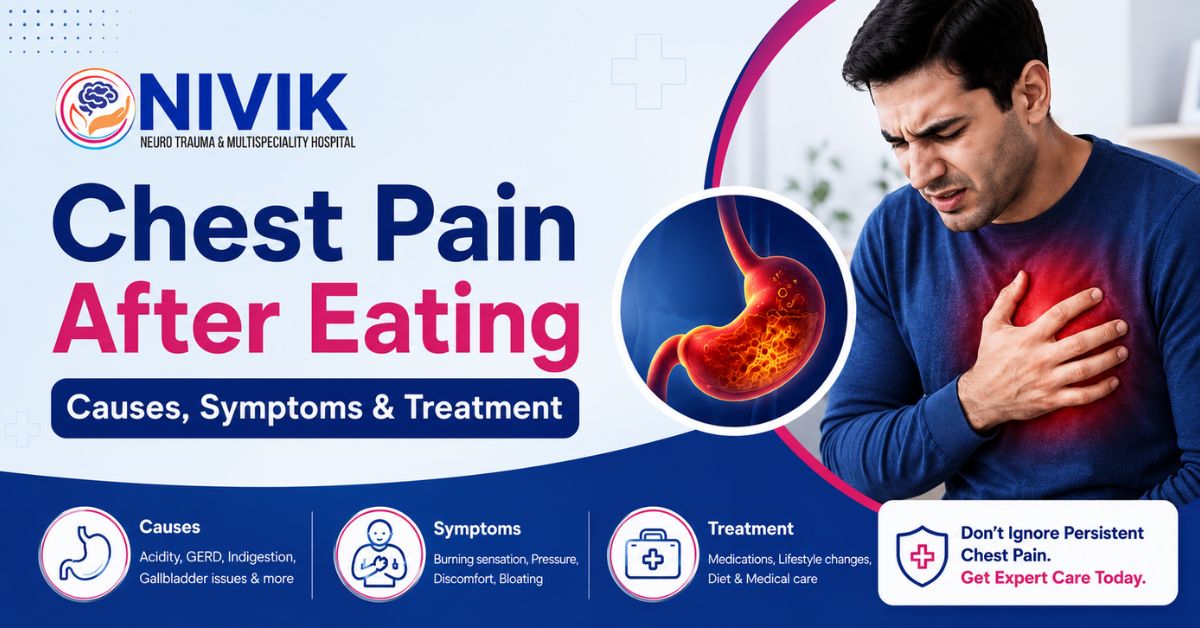
Chest Pain After Eating: Causes, Symptoms & Treatment
After eating chest pain is a very common affair because most people have complained about it at one stage in their life or the other. It could be due to simple reasons like acid reflux or indigestion but could also imply serious health problems which require immediate medical attention. Knowing the reason for the occurrence of chest pain after eating and ways of identifying its symptoms will help in keeping your health in check.
What is After-Eating Chest Pain?
After-eating chest pain could be defined as any form of discomfort, pressure, burning sensation, or pain that appears during or after eating. The pain could be mild in nature or severe enough to disrupt your otherwise normal life.
The causes of this problem could be of digestive origin rather than cardiac origin. Chest pain after eating could arise due to acid reflux or gastritis or due to excessive eating and swallowing disorders. Nevertheless, certain cardiac factors could also cause such pain.
What Are the Symptoms of Chest Pain After Eating?
The manifestations are dependent on the root cause. Some individuals have slight discomfort, whereas others may feel severe pain.
Typical indications consist of:
- Burning feeling in the chest
- Constriction in the chest
- Pain that starts soon after consumption of food
- Problems with swallowing
- Unpleasant taste in the mouth
- Gastroesophageal reflux after eating
- One feels gas in their stomach
- Discomfort in the upper abdomen
- Sensation of nausea and vomiting
- Pain that increases when lying down.
You can also read:- Food Rich in Vitamin B12: Benefits, Sources & Daily Intake
What Are the Common Causes of Chest Pain After Eating?
Chest pain can be caused by various digestive and non-digestive conditions after eating.
1. Agravitational Esophageal Reflux Disease (GERD)
One of the commonest reasons for this is GERD. The acid from the stomach rises back into the esophagus, which leads to their irritation and pain.
Symptoms are:
- Heartburn
- Food coming back
- Bad taste in the mouth
- Chest pain after eating.
2. Dyspeptic Problems
Consuming food too fast, spicy food and large quantities subsequently results in dyspeptic problems with chest discomfort, and fullness.
3. Gastritis
The inflammation of the lining of the stomach can lead to the pain in the upper abdomen that also can radiate to the chest.
4. Esophageal Spasm
Muscle spasm of the esophagus can lead to sudden chest pain similar to heart-related problems.
5. Food Allergy or Intolerance
Certain types of food may produce inflammation leading to chest pain.
6. Gallbladder Problems
Gallstones and inflammation of the gallbladder may lead to pain in the upper abdomen that may spread to the chest or shoulder after eating fatty food.
7. Hiatus Hernia
Hiatus hernia allows part of the stomach to slip into the thoracic cavity, thus increasing the risk of GERD and suffering from chest pain after meals.
How Is Chest Pain After Eating Diagnosed?
In case your symptoms occur regularly or are serious in nature, the doctor will assess you thoroughly. The procedure for diagnosis may consist of:
- Taking medical history and conducting a physical examination
- Conducting blood tests
- Electrocardiogram (ECG) procedure
- Conducting chest X-ray tests
- Conducting endoscopy
- Conducting upper GI imaging
- Monitoring pH levels of esophagus
- Conducting ultrasound tests in the abdominal region
- Evaluating cardiac functions in case there is suspicion of heart-related issues
You can also read:- Chakrasana Benefits: Complete Guide to Wheel Pose in Yoga
How to Treat Chest Pain After Eating?
The treatment mainly depends on its cause.
Changes to Your Lifestyle
- Many lifestyle changes can greatly relieve symptoms of heartburn.
- Eat smaller portions of food.
- Do not lie down directly after eating.
- Keep your weight in a healthy range.
- Quit smoking if you do smoke.
- Cut down on alcohol.
- Use less spicy, oily, and acidic foods.
Medications
Based on the diagnosis, your healthcare provider may advise:
Antacids
- Medication to decrease acid in the body
PPI drugs
- Medication to make stomach work properly
- Antibiotic drugs if any symptoms of infection
- Always take prescriptions as directed by your physician.
Treatment for Underlying Illnesses
If the cause of the illness is gallstones, hiatal hernia, or heart diseases, proper medical and surgical treatment is required.
Home Remedies to Relieve Chest Pain After Eating Naturally
Most mild cases get better through basic home treatment.
Some of the helpful remedies can include:
- Drink enough water.
- Eat food slowly and chew it thoroughly.
- Don’t eat too much.
- Remain in an upright position for at least 2-3 hours after eating.
- Limit the usage of caffeine.
- Eat more fiber rich foods.
- Don’t eat late at night.
- Learn how to manage stress.
- Exercise regularly.
What Are Stomach Heat Symptoms, Causes, Treatment, and Prevention?
In the opinion of many individuals, acidity, heartburn, or overproduction of stomach acids is often referred to as "heat" in the stomach.
Symptoms of Stomach Heat
The most common symptoms are:
- Burning sensation in the stomach
- Heartburn
- Acid reflux
- Sour belching
- Nausea
- Indigestion
- Burning sensation in the chest after eating
Causes of Stomach Heat
Some of the listed possible causes are:
- Spicy food
- Caffeine in excess
- Alcohol
- Smoking
- Stress
- Eating much
- Acid reflux
- Certain medications
Treatment of Stomach Heat
Treatment of the condition will depend on the cause of the symptoms. It may include change of diet, acid-reducing medication, increasing amount of water consumed, and medical intervention if needed.
Prevention of Stomach Heat
To protect yourself from the problem it is recommended:
- Eat balanced meals.
- Drink enough water.
- Limit quantities of spicy food in your meal.
- Do not smoke.
- Do not get stressed.
- Exercise regularly.
- Keep normal weight.
When Should You See a Doctor?
You should see your physician if you have any of these problems:
- Pain in the chest and it doesn’t go away for more than a few minutes.
- Pain after eating that doesn’t go away.
- Not being able to swallow food.
- Being ill for a long time and no doctor can explain why.
- Having trouble trying to lose weight.
- Stool or vomit is dark.
- Powerful heartburn that doesn’t disappear after treatment.
- Chest pain or sweating and pain reaching into other parts of the body.
Conclusion
In most cases, Chest Pain After Eating is related to some form of digestive disorder. Although this symptom usually means that something is wrong with digestion, like acid reflux, gastritis or indigestion, in some cases, it can indicate something more important.
If the pain persists, is very strong, or is faced together with other symptoms like breathlessness, dizziness or pain in the arm or jaw, people must turn to health care specialists at once. Timely determination of the cause makes it possible to be treated better, with lower risk of complications.
Nivik Hospital in Jaipur offers proper medical care within the Department of Gastroenterology and General Medicine.
Frequently Asked Questions (FAQs)
1. What is the remedy for stomach heat?
Ans. Remedium is from the underlying cause. It may include lifestyle changes, drinking enough water, avoiding certain foods and medications used to lower acid, as advised by the doctor.
2. What medication is available for stomach heat?
Ans. Doctors may prescribe antacids, H2 blockers, PPIs based on the severity and cause of the stomach heat.
3. What are natural remedies to treat stomach heat?
Ans. You can naturally cure this condition by drinking enough water, avoiding spicy food, eating small meals, limiting caffeine, lessening stress, and avoiding lying down after eating.
4. Is stomach heat associated with burning sensation and acidity?
Ans. It is an often misconstrued concept that there is stimulation of excessive stomach acid production leading to digestive disorders like heat in the stomach, and acidity.
5. What items may be eaten to relieve stomach heat?
Ans. Foods like bananas, oatmeal, yogurt, rice, cucumber, watermelon, green leafy vegetables, etc. are regarded as helpful in reducing stomach heat.
Book Appointment
Related Posts